

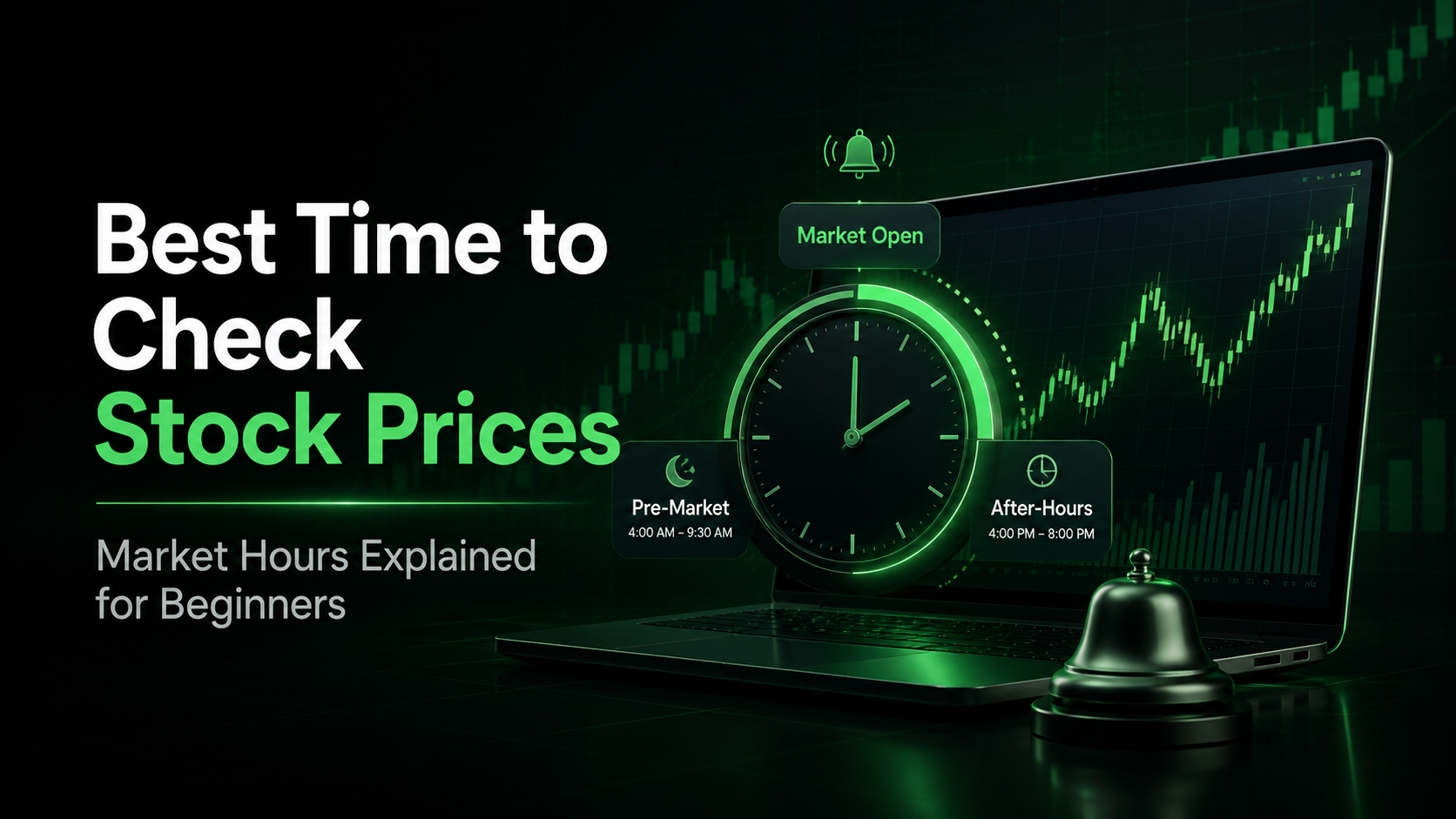
Stock prices can change every second during active trading hours. But many beginners are surprised when they see a stock move before the market officially opens or after it has already closed.
So when is the best time to check stock prices? And why do some prices move outside normal trading hours?
This beginner-friendly guide explains regular market hours, pre-market trading, after-hours trading, and the most important times of the day to watch stock prices.
Why Stock Prices Change During the Day
A stock price moves because buyers and sellers are constantly reacting to new information. When more people want to buy a stock, the price can rise. When more people want to sell, the price can fall.
Common reasons why stock prices move include:
- Company earnings reports
- Economic news
- Interest rate decisions
- Analyst upgrades or downgrades
- Market sentiment
- Political or global events
- Sector trends
- Large institutional trades
This is why stock prices often move more strongly at certain times of the day.
Regular Stock Market Hours
For many major U.S. stocks, regular trading hours are:
9:30 AM to 4:00 PM Eastern Time
This is the main trading session. During this time, the market usually has the highest trading volume, the tightest price spreads, and the most active price movements.
For beginners, this is usually the most reliable time to follow stock prices because prices are based on stronger market activity.
What Is Pre-Market Trading?
Pre-market trading happens before the regular stock market opens.
For U.S. stocks, pre-market trading can start several hours before the official opening bell. During this time, investors react to news that came out overnight or early in the morning.
Pre-market price movements can be caused by:
- Earnings reports released before the market opens
- Major company announcements
- Economic data
- Global market movements
- News from Asia or Europe
- Analyst rating changes
Pre-market prices can be useful, but beginners should be careful. Trading volume is often lower, which means prices can move quickly and sometimes look more dramatic than they really are.
What Is After-Hours Trading?
After-hours trading happens after the regular market closes.
For U.S. stocks, this usually starts after 4:00 PM Eastern Time. Many companies release earnings reports after the closing bell, so after-hours trading can sometimes be very active.
A stock may move after hours because of:
- Earnings results
- Revenue forecasts
- CEO comments
- Product announcements
- Breaking news
- Guidance updates
However, after-hours trading can also be less stable than regular trading hours. Prices may change sharply with lower volume.
The Best Times to Check Stock Prices
There is no single perfect time for everyone, but some moments are more useful than others.
1. Before the Market Opens
Checking stock prices before the market opens can help you understand the mood of the market.
This is useful if you want to see:
- Which stocks are moving early
- Whether futures are positive or negative
- If important news came out overnight
- How global markets may influence the U.S. session
For beginners, this is good for preparation, but not always for making quick decisions.
2. At Market Open
The first 30 to 60 minutes after the market opens can be very active.
Many traders react to overnight news, pre-market moves, and new orders placed before the opening bell.
This time can show strong price movement, but it can also be noisy. Beginners should avoid overreacting to every quick move right after the open.
3. Midday
The middle of the trading day is often calmer than the opening hour.
This can be a useful time for beginners because prices may move more slowly, and the market may feel less emotional.
Midday can be good for:
- Reviewing charts
- Reading company news
- Comparing stocks
- Checking long-term positions
- Learning without pressure
4. Before Market Close
The final hour of the trading day is also important.
Many professional traders and institutions adjust their positions before the market closes. This can create stronger movements, especially near the end of the session.
The closing price is important because it is often used in charts, financial news, and daily market summaries.
5. After Market Close
After the market closes, investors often review the day.
This is a good time to check:
- Daily gainers and losers
- Closing prices
- Market summaries
- Earnings announcements
- News that came after the close
For long-term investors, checking prices after the close can be less stressful than watching every intraday move.
Is It Bad to Check Stock Prices Too Often?
Yes, for many beginners, checking stock prices too often can become a problem.
Stock prices naturally move up and down during the day. Watching every small move can lead to emotional decisions.
For long-term investors, it is usually more useful to focus on:
- Company quality
- Long-term trends
- Earnings growth
- Valuation
- Risk management
- Diversification
Daily price changes are important, but they are not the whole story.
Why Stock Prices Can Look Different on Different Websites
Sometimes stock prices may look slightly different depending on where you check them.
This can happen because of:
- Delayed data
- Different exchanges
- Pre-market or after-hours prices
- Currency differences
- Data provider updates
- Bid and ask prices instead of last traded price
For most beginners, small differences are normal. The important thing is to understand whether you are looking at real-time, delayed, pre-market, after-hours, or regular market prices.
Real-Time Prices vs Delayed Prices
Some websites show real-time stock prices, while others show delayed prices.
A delayed price may be 15 minutes or more behind the actual market. This is usually fine for learning, general research, or long-term investing.
But for active trading, real-time data is more important.
Always check whether the price you see is real-time or delayed.
Should Beginners Watch Pre-Market and After-Hours Prices?
Beginners can watch them, but they should not overvalue them.
Pre-market and after-hours prices can give early signals, but they can also be misleading because trading volume is often lower.
A stock that jumps in pre-market trading may not always keep rising after the market opens. A stock that falls after hours may recover the next day.
Use these price movements as information, not as a final decision.
Simple Daily Routine for Checking Stock Prices
Here is a simple routine for beginners:
Morning
Check market news, futures, and major pre-market movers.
Market Open
Watch carefully, but do not react emotionally to every move.
Midday
Review charts and company information calmly.
Market Close
Check final prices, daily movers, and market summaries.
Evening
Read important news and prepare for the next trading day.
This routine helps you stay informed without staring at the market all day.
Important Terms to Know
Market Open
The time when regular stock trading begins.
Market Close
The time when regular stock trading ends.
Pre-Market
Trading activity before the regular market opens.
After-Hours
Trading activity after the regular market closes.
Volume
The number of shares traded during a period.
Volatility
How strongly and quickly a price moves up or down.
Bid Price
The highest price a buyer is willing to pay.
Ask Price
The lowest price a seller is willing to accept.
Final Thoughts
The best time to check stock prices depends on your goal.
If you are learning, the regular market session is the best place to start. If you want to understand early market sentiment, pre-market prices can be useful. If you want to follow earnings reactions, after-hours prices can be important.
For beginners, the most important thing is not to check prices every minute. Instead, learn how market hours work, understand why prices move, and build a simple routine.
Stock prices are only one part of investing. The better you understand the market structure, the easier it becomes to make calm and informed decisions.
Disclaimer
This article is for educational purposes only and does not provide financial advice. Stock prices can move quickly, and investing always involves risk. Always do your own research or speak with a qualified financial advisor before making investment decisions.